

Why consider alternatives to gutters?
While traditional gutters are highly effective, some homeowners consider alternatives due to:
- Aesthetics: A desire for a cleaner roofline without visible gutters.
- Maintenance Burden: Frustration with constant gutter cleaning and clogs.
- Architectural Style: Certain home designs may not lend themselves well to traditional gutters.
- Budget: Seeking more cost-effective solutions for water diversion.
- Environmental Goals: Wanting to integrate sustainable water management into landscaping. However, it’s crucial to understand that most “alternatives” manage water differently and may not offer the same comprehensive foundation protection as a well-installed gutter system, especially in areas with heavy rainfall.
Top alternatives
Rain chains (above & underground)
Rain chains are decorative alternatives to downspouts, guiding water along a series of cups or links.
- Above Ground: Visually appealing, creates soothing sounds, but can splash significantly in heavy rain.
- Underground: Can be combined with underground drainage to carry water further away, balancing aesthetics with more controlled flow.
- When it makes sense: For aesthetic appeal, small roof sections (e.g., porches), or connecting to rain barrels in areas with moderate rainfall.

Drip edges & drip paths
- Drip Edges: Metal flashing installed under the roof shingles at the edge, designed to direct water away from the fascia board, preventing rot. They are a complement to, not a replacement for, gutters.
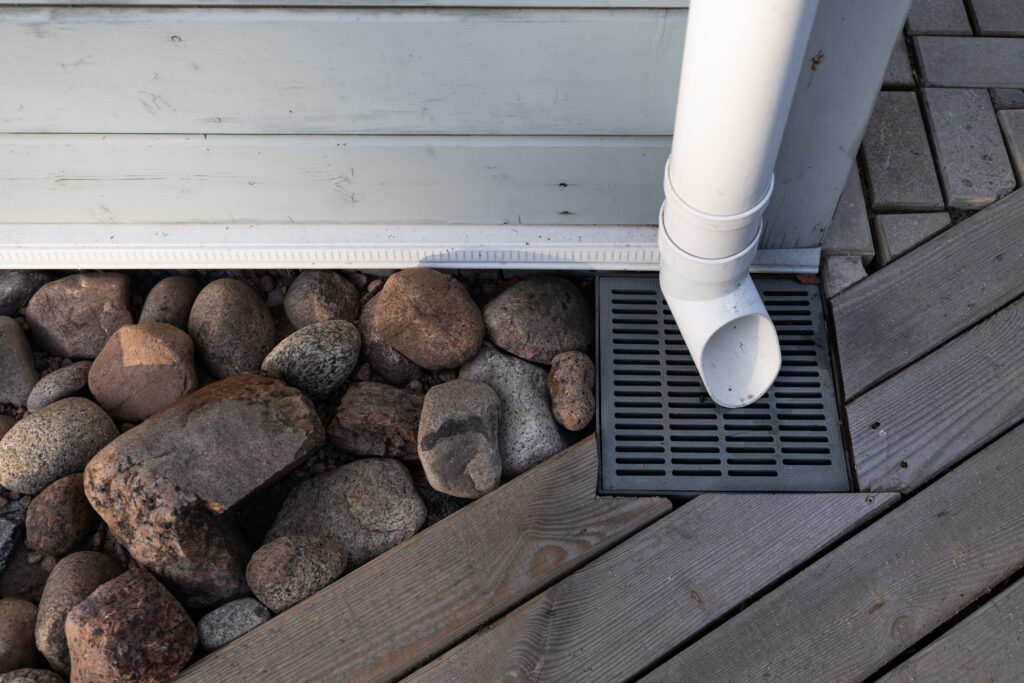
- Drip Paths: A gravel-filled trench or a bed of river stones positioned directly beneath the roof edge. Water drips from the roof onto the stones, which help prevent erosion and splash-back onto the siding.
- When it makes sense: In very arid climates with minimal rainfall, or as a secondary measure in conjunction with minimal roof overhang.
French drains & channel drains
- French Drains: A trench containing a perforated pipe surrounded by gravel, designed to collect and redirect subsurface water or surface runoff away from an area.
- Channel Drains: Long, narrow grates often installed in hardscapes (like driveways or patios) to capture surface water and direct it into an underground pipe.
- When it makes sense: Primarily for managing ground-level water issues, preventing water from reaching the foundation from the landscape, or supplementing gutter systems. Not a direct roof runoff solution.
Yard grading & rain gardens
- Yard Grading: Ensuring the ground around your home slopes away from the foundation. This is perhaps the most fundamental and effective “alternative” for preventing water accumulation near the house. A minimum slope of 6 inches over the first 10 feet is often recommended.
- Rain Gardens: Landscaped depressions planted with native, water-loving vegetation. They are designed to collect stormwater runoff from impervious surfaces (like roofs and driveways) and allow it to slowly infiltrate the ground.
- When it makes sense: Essential for all homes. Rain gardens are excellent for sustainable water management and improving landscape aesthetics, but they require proper design and are best paired with some form of roof runoff collection (like downspouts) to direct water into them.
Comparison: when each alternative makes sense
| Alternative | Primary Function | Ideal Use Case | Limitations |
| Rain Chains | Aesthetic water diversion | Light rain, decorative spots, small roofs | Splashing, lower capacity, potential icing |
| Drip Paths | Splash/erosion control | Minimal rainfall, short overhangs | Doesn’t direct water far, can get clogged |
| French Drains | Subsurface/surface water management | Soggy yards, channeling ground water | Not for direct roof runoff, complex install |
| Yard Grading | Foundation protection (passive) | Fundamental for all homes | Requires space, passive, doesn’t collect water |
| Rain Gardens | Stormwater absorption/infiltration | Sustainable landscaping, requires runoff input | Needs space, specific plants, can overflow |
Export to Sheets
Installation & cost overview
- Rain Chains: DIY-friendly, low cost ($50-$300+ per chain).
- Drip Paths: DIY-friendly, moderate cost (gravel, landscape fabric).
- French Drains: Moderate to complex DIY, or professional install. Moderate to high cost ($1,000-$5,000+).
- Yard Grading: Can be DIY for minor adjustments, but significant re-grading requires professional excavation. Cost varies widely ($500-$10,000+).
- Rain Gardens: DIY-friendly for small ones, professional for larger designs. Moderate cost ($100-$1,000+ for materials/plants).
Combining with gutter systems
Many of these “alternatives” are best viewed as complements rather than complete replacements for a full gutter system.
- Hybrid Approach: A common and effective strategy is to install a traditional gutter system on the majority of your home for maximum protection, then use alternatives in specific areas.
- Example: Use rain chains in decorative spots or to feed a rain barrel.
- Example: Utilize yard grading and potentially a French drain to manage ground-level water that might accumulate near the foundation despite gutters.
- Example: Direct downspouts into a rain garden. This hybrid approach provides robust water management while incorporating desired aesthetics or sustainable practices.
Maintenance considerations
- Rain Chains: Occasional cleaning of debris, winter removal in cold climates.
- Drip Paths: Replenish gravel periodically, clear debris from stones.
- French Drains: Can clog over time; require periodic flushing or professional cleaning.
- Yard Grading: Ensure continued slope; re-grade if settling occurs.
- Rain Gardens: Regular weeding, plant care, and ensuring proper infiltration.
Looking for smart ways to manage rainwater? All Gutters specializes in comprehensive drainage solutions, including traditional systems and innovative alternatives. Let’s find your perfect fit!